12 min read
Unbounce:

Boosted a feature through engagement
Company
Unbounce
Team
Product Manager, Dev-team (Frontend & Backend), Data Analytic, Customer Success Manager
Project DURATION
January 2023 - May 2023
ROLE
Senior Product Designer
UX Research, Product Strategy, Design Vision, Prototyping & Testing, Visual Design
Business goal
Increase feature adoption. Improve understanding, trust, and usage of Smart Traffic as a core optimization engine.
Boost customer retention. Help customers achieve faster, clearer wins through insights and benchmarking so they stay longer and rely more on the platform.
Differentiate the product in a competitive market. Position Unbounce as the easiest and smartest landing page platform by elevating insights, AI-driven optimization, and industry benchmarking.
Increase Smart Traffic feature engagement.
Reduce support costs. Enable customers to self-diagnose performance issues and understand results without needing support intervention.
Customer goal
Unbounce users - from marketers to small business owners - needed a product that helped them work smarter, move faster, and achieve real results:
Help understand What’s Working and Why.
Feel Supported and Guided.
Optimize with less guesswork. Users wanted smarter tools — like Smart Traffic — that made optimization easier and more effective, even for non-experts.
Feel supported and guided. Users wanted fewer blockers, fewer support tickets, and more built-in guidance to help them succeed on their own.
Problem
Small and medium-sized businesses spend too much time and effort trying to understand their landing-page performance.
Impact
Improvements to Smart Traffic were rolled out incrementally, resulting in:
+17% weekly active usage of performance insights.
+23% increase feature adoption among existing customers.
+16% increase in customer retention.
–32% support tickets related to Smart Traffic understanding.
Smart Traffic feature
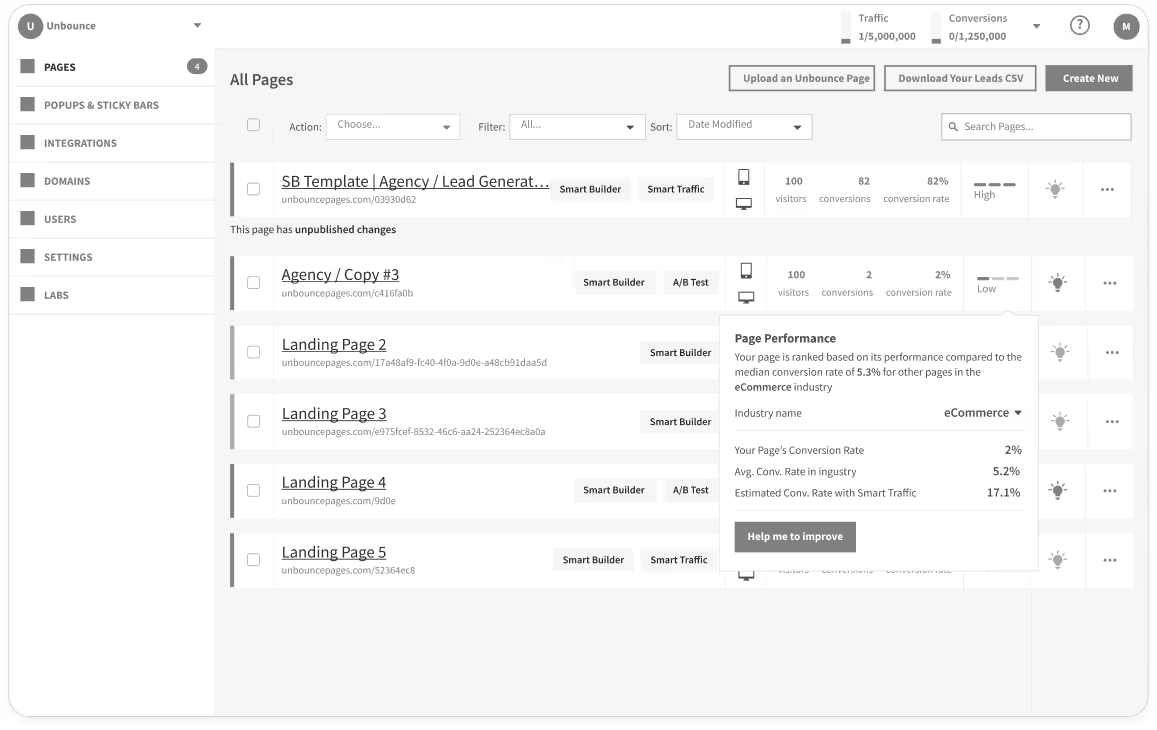
Unbounce helps create landing pages and improve conversion rates.
Ubounce | Overview pic
Research approach
To deeply understand customer behavior and pain points, I ran a mixed-methods research process:
Quantitative:
Data analysis of feature usage
Drop-off funnel analysis across Smart Traffic
Feature usage, heatmaps and click-tracking
Performance variance by industry.
Qualitative:
1:1 user interviews with marketers, founders, and agencies.
Support team shadowing.
Expert review with CRO specialists.
Concept testing with low-fidelity prototypes.
Our personas
Research surface unknowns that will guide the journey.
I focused on identifying what is the day to day jobs, needs, to-do’s, achievements (Jobs-to-be-Done framework).
Unbounce | Persona 1
Agile marketer
A hands-on marketing manager or business owner focused on rapid growth. She/he values tools that optimize campaign performance and simplify the process of identifying the best landing pages to scale efforts.
JOBS-TO-BE-DONE:
Boost landing page conversion rates to grow their business while reducing the time spent managing campaigns.
Unbounce | Persona 2
Strategic advisor
A seasoned freelancer or small agency owner managing multiple client campaigns. She/he values tools that demonstrate clear performance metrics to clients and streamline campaign management without manual A/B testing.
JOBS-TO-BE-DONE:
When I deliver a campaign for my client, I want to show them the value of optimized landing pages quickly, so I can save time and strengthen my pitch to managers or colleagues.
Unbounce | Persona 3
Data-driven specialist
A marketing or business development professional in accounting or insurance. She/he prioritizes tools that provide benchmarks against market performance and make it easy to adapt strategies for better results.
JOBS-TO-BE-DONE:
When I create landing pages for a lead generation campaign, I want to compare my performance to industry benchmarks, so I can build more competitive pages and deliver measurable results.
Unbounce customers want to understand their users, and be best on the market.
Together with a UX researcher, I gathered information (known and unknown), and identified the core pillars of creators' challenges.
"How do I know which landing page version is actually performing the best without digging into endless data?"
"I need to show my team the ROI of our landing pages, but I don’t know the best way to present the data."
"How can I prove to my manager that optimizing our landing pages directly impacts conversions?"
"Is my landing page competitive compared to others in my industry? I need benchmarks to improve."
"I want to create landing pages that consistently outshine the competition, but I don’t know where to start."
"What’s the easiest way to adapt my landing pages for different audience segments automatically?"
Key insights
64%
prefer a single “source of truth” over switching between analytics tools.
80%
of those who try Smart Traffic on a page continue to use it.
72%
want industry benchmarks to validate their decisions.
80%
respond positively to actionable recommendations instead of raw metrics.
Helpful notes:
Larger companies with more resources are already targeting specific customer profiles.
So, whose problem am I solving?
Based on the data, the most valued audience includes:
By company size:
Small (1-10 employees)
Medium (11-49 employees)
By industry:
E-commerce
Agencies
Accounting
Insurance
Design principles
Next session determines design principles for smart traffic, to make sure that design is aligned with the business goals and centered around our customers.
Reduce Cognitive Load
Provide contextual recommendations.
Guide, Don’t Overwhelm
Visual style guide existed, but it functioned as a design-only artifact rather than a shared system.
Provide contextual recommendations.
Make Intelligence Feel Human
Visual style guide existed, but it functioned as a design-only artifact rather than a shared system.
Show impact in real business terms (conversions, revenue lift).
Highlight progress to keep engagement high.
Contextual Awareness
Optimize campaigns with intuitive, beginner-friendly tools.
Provide contextual recommendations.
Prioritize Velocity of Action
Every feature should shorten the path from signal → decision → result.
Provide contextual recommendations.
Design Sprint
Using the Google Design Sprint Methodology, I facilitated cross-departmental collaboration, involving product manager, dev.team, customer representatives.
Focus:
Simplicity and clarity.
Minimal learning curve.
High-value insights surfaced quickly.
Unbounce:
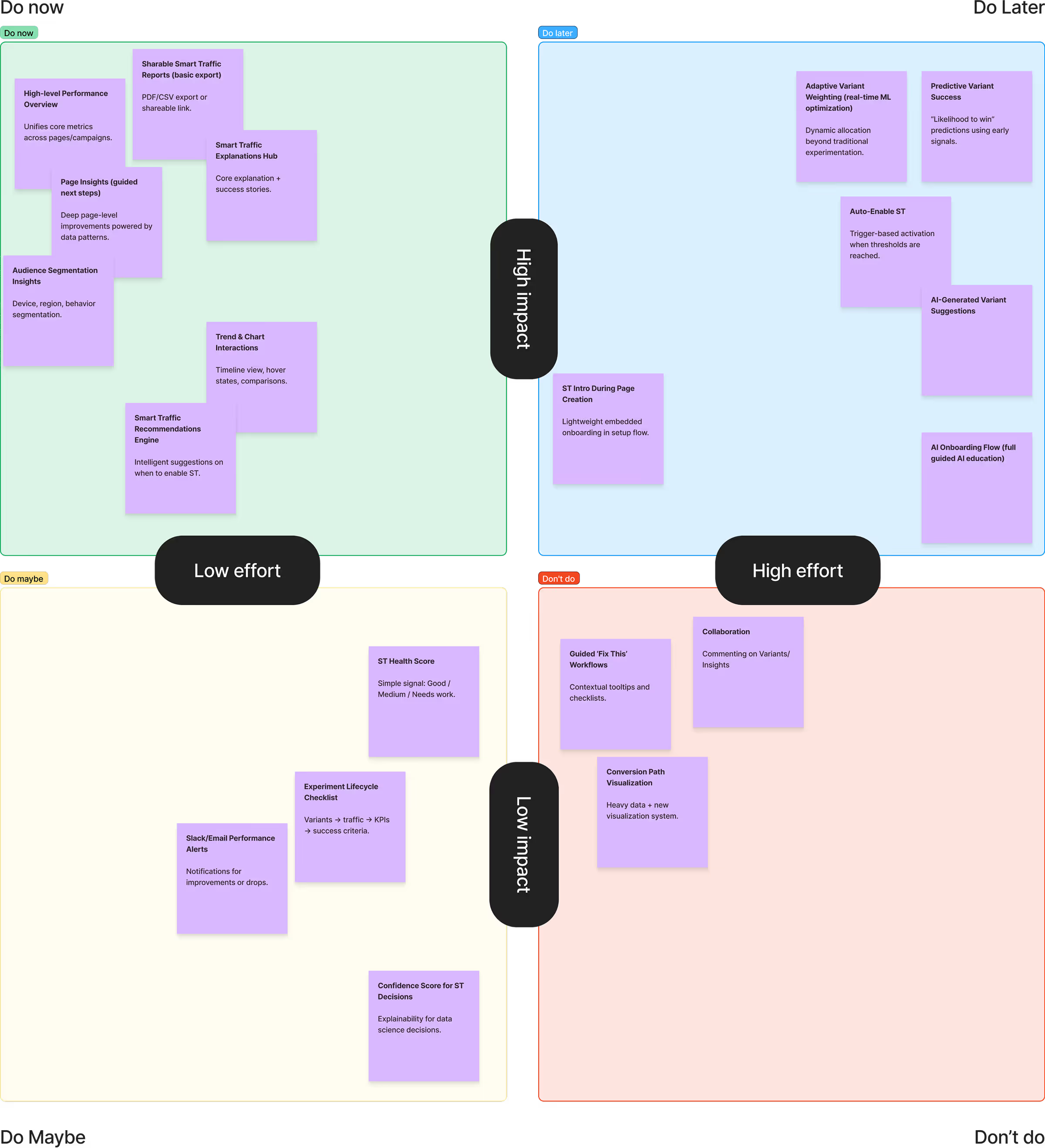
Prioritization mapping

Roadmap

Short-term goals:
Leverage customer insights to implement and test small, impactful improvements that deliver quick, measurable results:
Offer deeper insights.
Educate users about Smart Traffic.
Provide clear information on page performance.
Long-term goals:
Develop an onboarding process to showcase the power of AI.
Simplifying workflows to reduce friction for users.
Use insights from the Design Sprint to shape a long-term customer experience improvement plan, focusing on personalization.
Overall
Increase the percentage of accounts using Smart Traffic and provide insights to guide our customers.
Early designs
These wireframes were created to align with our design principles, helping shape and refine our ideas effectively.
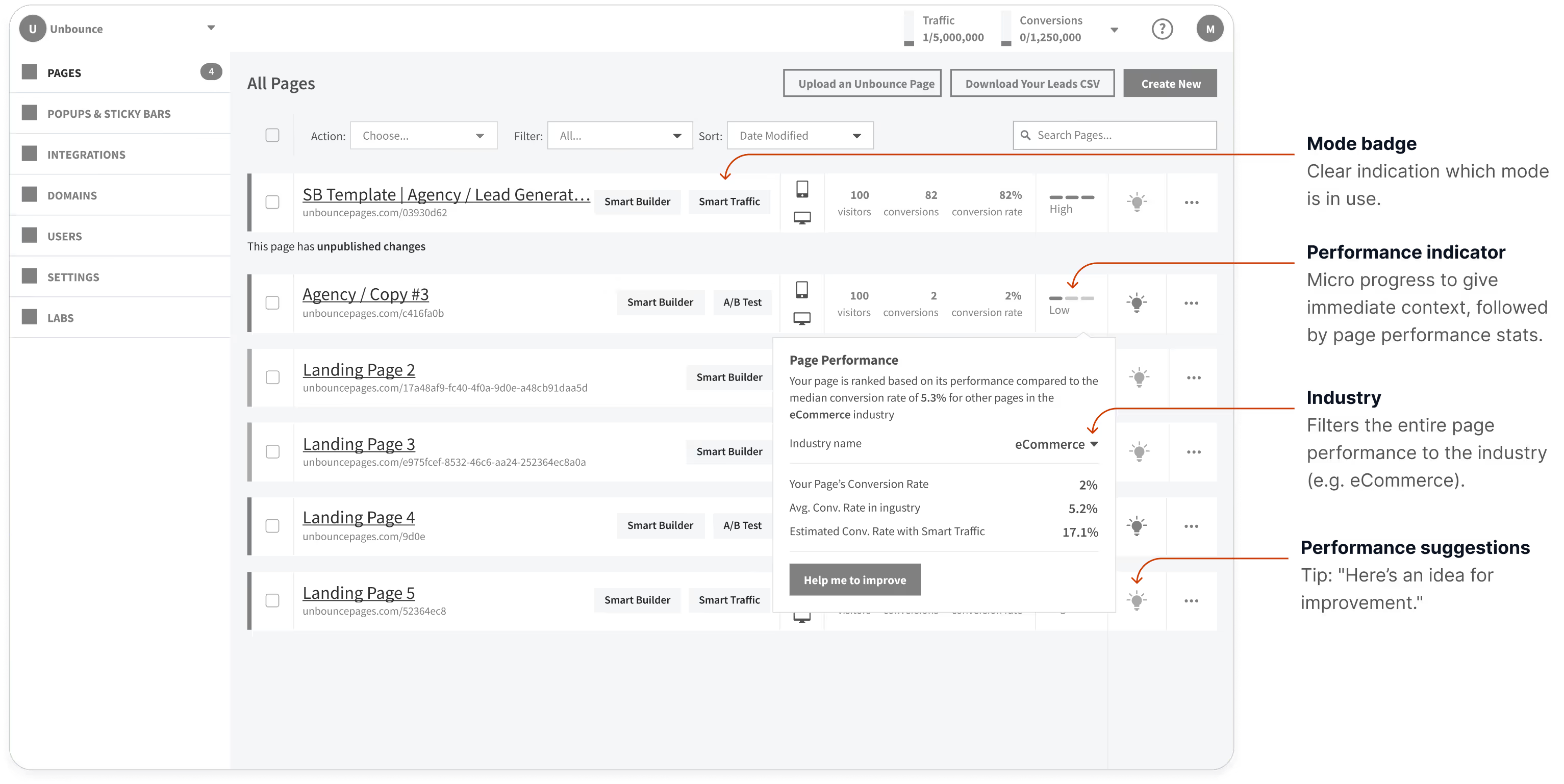
High level / All campaigns (pages)
The most visited page (All Pages/Performance) provides a high-level overview of all user campaigns, offering insights into overall page performance. I focused on ensuring campaign success by enhancing support and adding key features where users need them most.
Hypothesis:
If we surface core performance metrics as a core, users can immediately understand how their variants are performing without digging into details.
Unbounce | Wireframe | Main Page
Trade-offs:
Works well for advanced users, but beginners may feel overwhelmed by raw numbers.
Less room for contextual insights or recommendations.
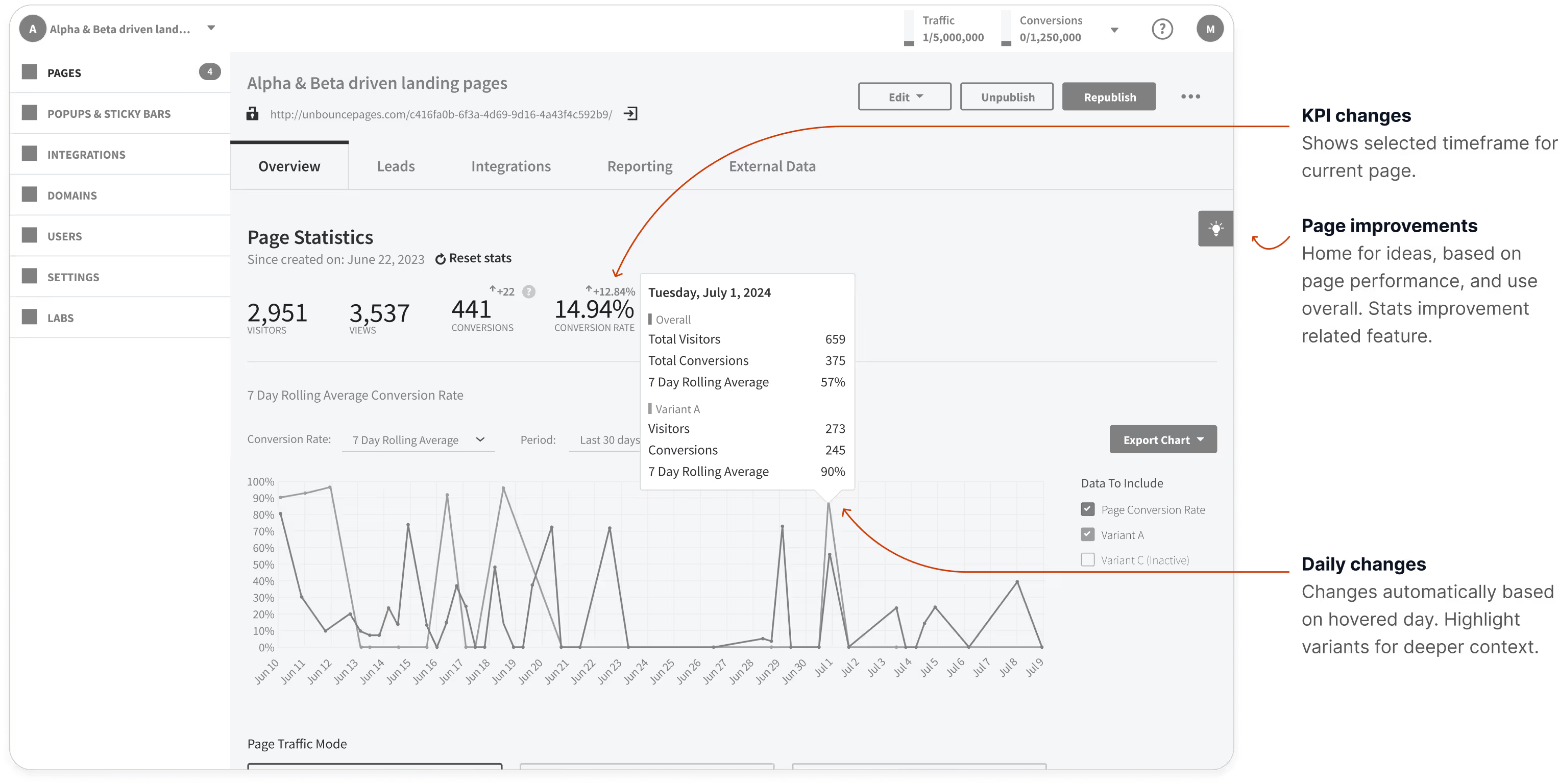
Page level / Campaign page overview
This page provides customers with detailed insights into their page performance results. I included a summary of key changes over a selected period and added personalized suggestions to help improve page performance based on campaign data.
Hypothesis:
Presenting performance over time helps users understand patterns, anomalies, and the progress of Smart Traffic’s learning.
Unbounce | Wireframe | Campaign
Trade-offs:
Time-series data adds complexity.
Harder to digest quickly for users who prefer simplified summaries.
Page level / Opportunities
This section includes all the necessary steps and actions to help customers improve their page performance effectively.
Hypothesis:
If we lead with clear, AI-generated insights and recommendations, users will understand what actions to take faster, improving adoption and confidence.
Unbounce | WIreframe | Page
Trade-offs:
Less granular detail upfront; users may need additional clicks to validate the insight.
Relies heavily on the quality and trustworthiness of AI explanations.
Prototypes and tests
The goal was to create a product that customers would find valuable, so I focused on testing its usefulness.
I conducted user tests using Maze’s tool to gather feedback:
internal team reviews.
stakeholder alignment.
5 internal participants (customer representatives).

Scope

Clarity of Smart Traffic value
to ensure users understood how it works and why it benefits them.
Relevance and usefulness of insights
to validate whether recommendations felt actionable and increased trust.
Data comprehension and hierarchy
to confirm users could quickly identify what matters most without feeling overwhelmed.
Navigation and page-to-page flow
to ensure users could smoothly move from overview to page-level details.
Learnings from testing
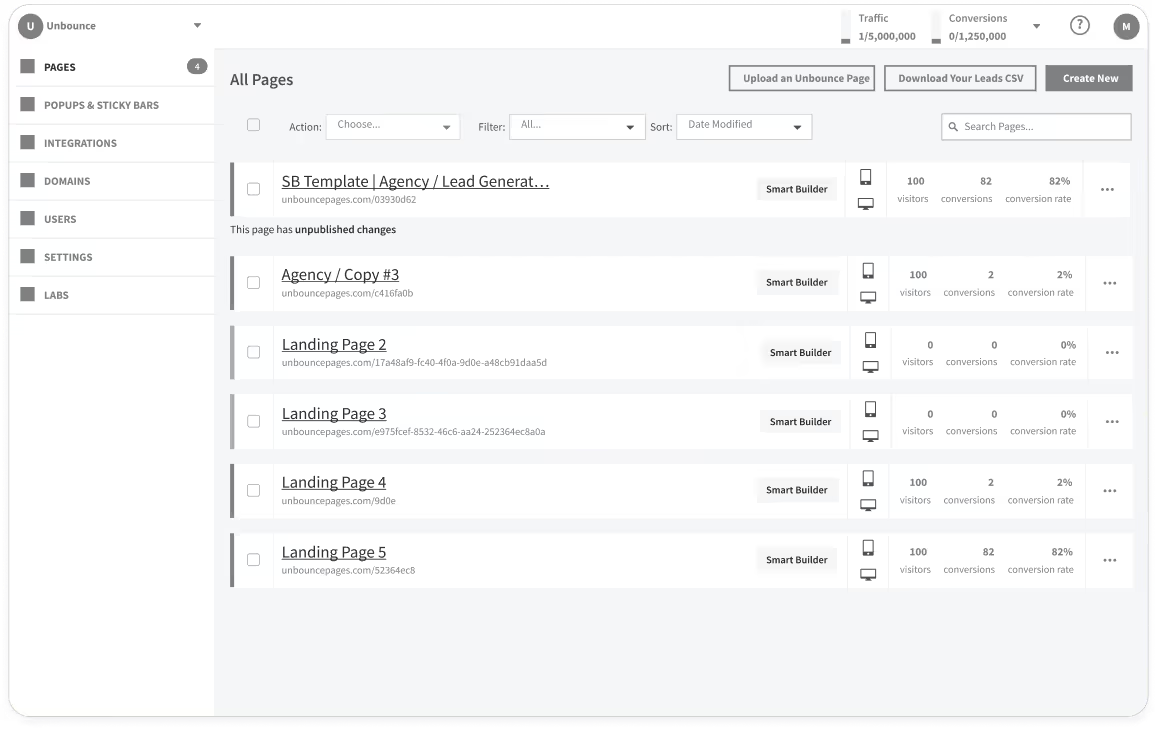
Previously, the homepage for customer campaigns only provided basic information about the campaigns, with little focus on the unique value of the product. Customers were primarily focused on the campaigns themselves, which didn’t effectively showcase the full potential of the product.
Before
Image | Unbounce | Before
After
Image | Unbounce | After

Insights from User Testing

Benchmarking unlocks confidence.
When provided with prototype benchmark views, all 5 testers reported feeling “more confident” and “better informed.”
Users want simple, actionable insights—not raw data.
Users consistently said they “don’t have time to interpret complex data.”
Showing early wins increases retention and adoption:
80% said they would enable Smart Traffic more confidently.
60% reported a higher likelihood of revisiting insights weekly.
Users expect proactive and intelligent guidance.
3 out of 5 representative users said they want notifications when performance changes.
After testing and improvements, I empowered the design to better highlight the product’s unique value and provide more meaningful insights to users.
Compete with top pages on the market
We enabled customers to see their current page performance and use Smart Traffic to enhance metrics.
Unbounce Pages animation
Driving Engagement and Adoption
+
17% click-through rate.
+
23% feature adoption rate through the performance page.
+
34% more users engaging with “Suggested Improvements”.
Tracking conversion rates on timeline
Creators can monitor daily customer behavior and conversions to gauge business performance. Data can be downloaded as a report for in-depth analysis.
Unbounce chart animation
Boosting User Interaction and Retention
+
12% average Session Duration.
+
16% positive impact on customer retention of the Smart Traffic feature.
Educate customers and showcase new features
Given that Smart Traffic is relatively new, we focused on educating customers about its benefits and building trust. We provided immediate access to information and documentation.
Unbounce Tooltips animation
Building trust through education
+
20% increase in pages published with Smart Traffic within 1 month.
+
Improved customer understanding of value.
+
Educational resources to build trust through helpful content.
+
Added learning tooltips to further educate the audience.

Results

Prioritization of top landing pages
Smart Traffic helps identify and prioritize the best landing pages in the industry.
Provide contextual recommendations.
Increased users interest
Data shows strong user interest in the new feature.
Provide contextual recommendations.
Enhanced education
Provided learning materials to educate customers about the new feature.
Provide contextual recommendations.
Business value
Improved customer understanding of value.
Provide contextual recommendations.
Growing engagement
Customers who tried Smart Traffic became more engaged with insights.
Provide contextual recommendations.
Next steps
As a team we have achieved our short-term goals and now need to focus on prioritizing long-term solutions:
Add real-time user session insights (scroll, click, attention).
Enable predictive conversion modeling.
Evolve Smart Traffic explanations with natural language summaries.
Expand competitive benchmarking.